If you want to build a sustainable income from your blog, there’s one strategy that almost every top blogger and content creator swears by: starting an email newsletter. While social media platforms rise and fall, your email list belongs to you. And with tools like Beehiiv, Substack, and ConvertKit making it easier than ever, there has never been a better time to launch a newsletter and monetize it from day one.

In this complete guide, we’ll walk you through everything — from choosing the right newsletter platform, to growing your first 1,000 subscribers, to the exact ways you can turn those subscribers into real income. Let’s dive in.
Why a Newsletter Is the Most Powerful Blogging Asset You Can Build
Most bloggers focus all their energy on SEO and social media traffic. But here’s the problem: Google can change its algorithm overnight. Instagram can throttle your reach. TikTok can ban your account. Your email list? That’s yours forever.
- Direct access to your audience — No algorithm standing between you and your readers
- Higher engagement rates — Email open rates average 30-50%, vs. 2-5% on social media
- Owned audience — You control the list, the message, and the timing
- Multiple monetization paths — Sponsorships, paid subscriptions, affiliate links, product sales
- Amplifies your blog — Every newsletter issue drives traffic back to your site
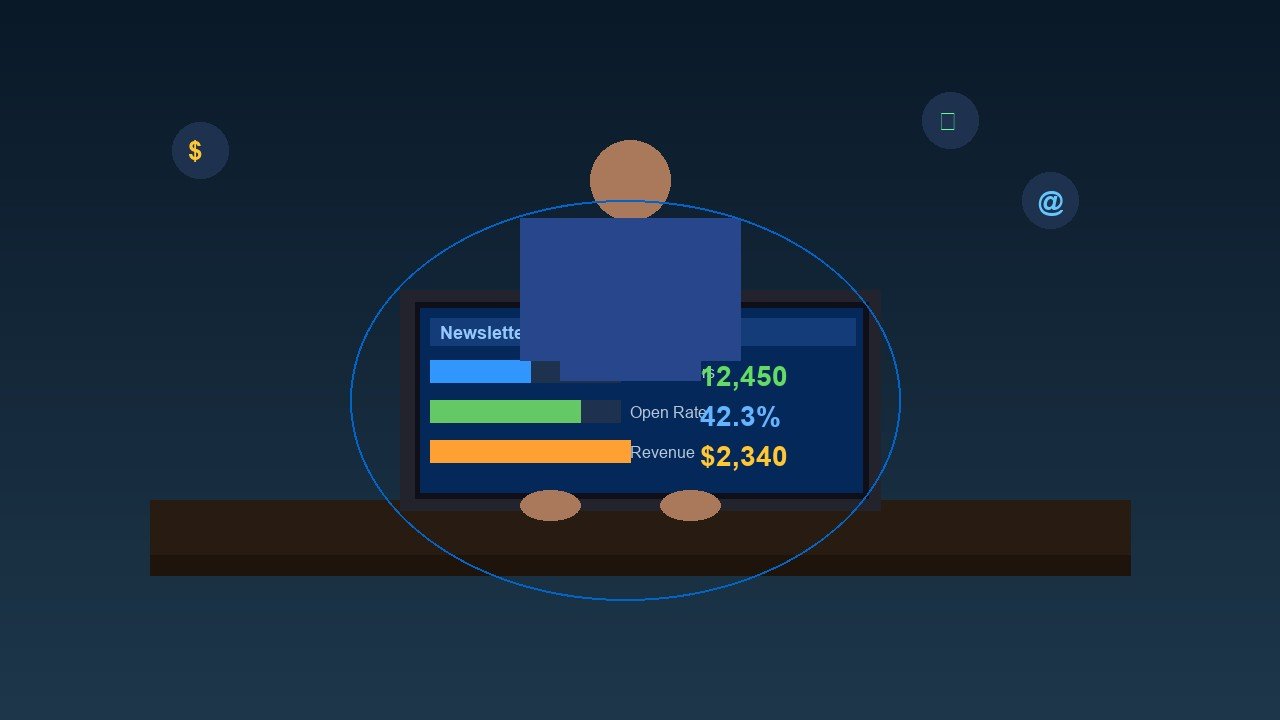
Top newsletter creators are earning anywhere from $5,000 to over $1,00,000 per month. Even with just 5,000 highly engaged subscribers, you can generate meaningful income consistently.
Choosing the Right Newsletter Platform
Before you write a single word, you need to pick your platform. Here’s a comparison of the top newsletter tools available right now:
| Platform | Free Plan | Best For | Monetization |
|---|---|---|---|
| Beehiiv | Up to 2,500 subs | Serious newsletter businesses | Paid subscriptions, boosts, ads |
| Substack | Unlimited (takes 10%) | Writers & thought leaders | Paid subscriptions |
| ConvertKit | Up to 1,000 subs | Bloggers & creators | Paid newsletters, commerce |
| Mailchimp | Up to 500 subs | Small businesses | E-commerce integrations |
| Ghost | Self-hosted (paid) | Professional publishers | Memberships, subscriptions |
Our Recommendation: Beehiiv for Most Bloggers
Beehiiv has quickly become the go-to platform for serious newsletter creators. Its free plan supports up to 2,500 subscribers with zero revenue cut. Once you grow, their Scale plan ($99/month) unlocks paid subscriptions, a robust ad network, boosts (paid cross-promotions), and advanced analytics.
If you’re starting from scratch, Beehiiv is where we’d begin. If you’re primarily a writer focused on paid subscriber income, Substack’s built-in audience discovery makes it a strong alternative.
How to Set Up Your Newsletter in Under an Hour
Setting up your newsletter is surprisingly fast. Here’s the step-by-step process:
Step 1: Pick Your Newsletter Name and Niche
Your newsletter name should be clear, memorable, and niche-specific. Avoid generic names like “Weekly Updates.” Instead, aim for something that signals exactly who it’s for:
- The Indie Hacker Weekly — for solo entrepreneurs
- AI Tools Daily — for people who want to stay current on AI
- The Blogger’s Toolkit — for content creators wanting growth tips
Step 2: Define Your Newsletter Format
The best newsletters have a consistent format. Readers know exactly what to expect. Popular formats include:
- Curated links — You round up the best content from around the web on a topic
- Original essays — You share your own insights, analysis, or stories
- How-to guides — Step-by-step practical advice delivered weekly
- News digest — Top stories in your niche, summarized and explained
- Hybrid — A mix of original content + curated resources
Step 3: Write a Killer Welcome Email
Your welcome email is the most important email you’ll ever send. It goes out the moment someone subscribes. Use it to:
- Introduce yourself and your story
- Tell them exactly what they’ll receive and how often
- Deliver your lead magnet (if you have one)
- Ask them to reply with one question or challenge they’re facing
That final point is powerful — replies signal to email providers that your newsletter is legitimate and wanted, which dramatically improves deliverability.
Step 4: Create a Lead Magnet to Drive Sign-Ups
A lead magnet is a free resource you give people in exchange for their email address. The best lead magnets are specific, immediately useful, and directly tied to your newsletter topic. Ideas:
- A checklist (e.g., “50 Blog Post Ideas for Any Niche”)
- A PDF guide (e.g., “The Newsletter Launch Playbook”)
- A template (e.g., “Newsletter Issue Template for Creators”)
- A mini-course delivered over 5 emails
- Access to a resource library or swipe file
Growing Your Newsletter: From 0 to 1,000 Subscribers
The hardest part isn’t setting up your newsletter — it’s growing it. Here are the most effective tactics for reaching your first 1,000 subscribers:
1. Embed Sign-Up Forms Everywhere on Your Blog
Your blog is your biggest growth channel. Add newsletter sign-up forms to:
- The top of your homepage
- After every blog post (contextual CTA)
- In your sidebar
- As a mid-article pop-up (triggered at 50% scroll depth)
- In your blog’s footer
2. Cross-Promote on Social Media
Share snippets of your newsletter on Twitter/X, LinkedIn, Instagram, and wherever your audience hangs out. Give people a taste of your best content — enough to make them want the full thing delivered to their inbox.
3. Use Newsletter Referral Programs
Both Beehiiv and SparkLoop let you set up referral programs where existing subscribers earn rewards for bringing in new ones. This is how newsletters like Morning Brew grew to millions of subscribers. Even at a small scale, referral programs can double your growth rate.
4. Guest Newsletters and Collaborations
Reach out to other newsletter creators in your niche and propose a swap — you promote their newsletter to your list, they promote yours to theirs. This is one of the fastest ways to add hundreds of targeted subscribers in a single week.
5. SEO-Optimized Newsletter Archive Pages
Most newsletter platforms let you publish your past issues as public web pages. Optimize these pages for SEO. When someone finds your newsletter issue through Google search, you get an organic subscriber — zero cost, ongoing return.
How to Make Money From Your Newsletter
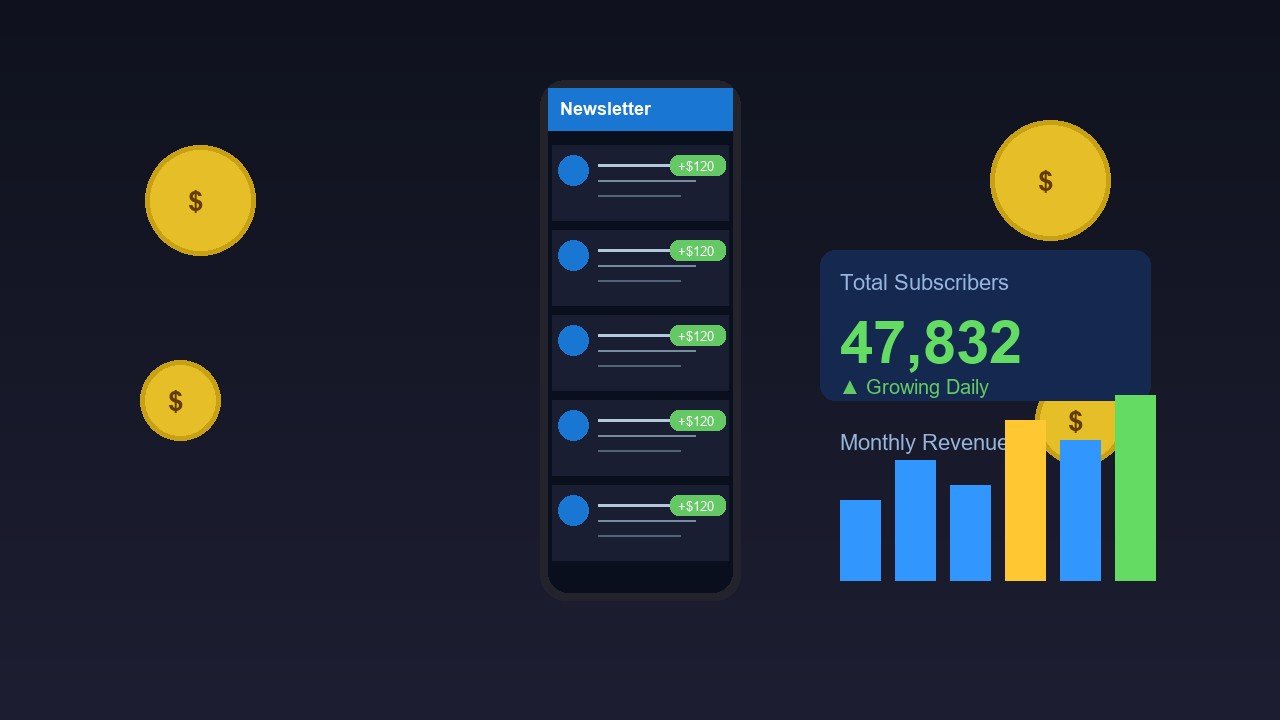
Once you have a growing, engaged list, you have multiple ways to monetize it. Here are the most effective revenue streams:
1. Newsletter Sponsorships
Sponsorships are the #1 revenue source for most newsletter creators. Brands pay to have their product or service featured in your newsletter. Rates vary widely based on your niche and audience quality:
- General lifestyle/consumer niches: $20–$50 per 1,000 subscribers (CPM)
- Business/marketing/tech niches: $50–$150 per 1,000 subscribers
- Finance/investing niches: $100–$300+ per 1,000 subscribers
With 10,000 subscribers in a business niche and a single weekly sponsorship at $75 CPM, that’s $750 per issue — over $3,000 per month from one revenue stream alone.
2. Paid Newsletter Subscriptions
Offer a free tier and a premium paid tier. Free subscribers get your regular issues; paid subscribers get exclusive content, deeper dives, community access, or early access to resources. Typical pricing is $7–$15/month or $50–$100/year.
With just 200 paid subscribers at $10/month, that’s $2,000 in recurring monthly revenue — completely predictable, completely yours.
3. Affiliate Marketing in Your Newsletter
Recommend products and tools you genuinely use, with affiliate links. Because your newsletter audience is highly engaged and trusts you, affiliate conversions tend to be much higher than on blog posts. The key is to be selective — only recommend things you’ve personally used and believe in.
4. Selling Your Own Digital Products
Your newsletter is the perfect launch platform for your own products: ebooks, courses, templates, coaching programs, or membership communities. When you launch to an engaged email list, you convert at 5–15% — orders of magnitude higher than cold traffic from SEO or ads.
5. Beehiiv Boosts and Paid Recommendations
Beehiiv has a unique “Boosts” feature where other newsletters pay you to recommend them to your subscribers. Every time one of your readers subscribes to a boosted newsletter, you earn a set amount (usually $1–$3 per new subscriber). This is fully passive and runs automatically in the background.
Newsletter Content Strategy: What to Write Every Week
Many newsletter creators get stuck after the first few issues. Here’s a content system to keep ideas flowing:
The 3-Part Issue Structure
- Opener (150-200 words): A personal story, observation, or hot take related to your niche. This is what makes your newsletter feel human and worth reading.
- Main content (500-800 words): Your primary value — the guide, analysis, curated links, or how-to for this issue.
- Closer + CTA (100-150 words): A question to prompt replies, a plug for your product/sponsor, and a preview of next week’s issue.
Content Ideas That Always Perform
- Lessons learned from a recent experience or mistake
- “What I’d do differently if starting today”
- Tool or resource roundups (5 tools for X)
- Interview summaries with an expert in your niche
- Behind-the-scenes of your own blog/business growth
- Reader question Q&A issues
- Hot takes on a trending topic in your niche
Newsletter Metrics That Actually Matter
Don’t get distracted by vanity metrics. Focus on these:
| Metric | Good Benchmark | Why It Matters |
|---|---|---|
| Open Rate | 35%+ | Shows your subject lines and sender reputation are strong |
| Click Rate | 3-8% | Indicates engaged, action-taking audience |
| Subscriber Growth Rate | 10%+ monthly | Your growth engine is working |
| Churn Rate | Below 2% monthly | Your content is valuable enough to keep |
| Revenue per Subscriber | $1-5/month | Your monetization is healthy |
Common Newsletter Mistakes to Avoid
- Inconsistent sending schedule — Pick a day and stick to it. Readers expect consistency.
- Writing for everyone — The more specific your niche, the more loyal your audience.
- Monetizing too early — Build trust and engagement first. Introduce sponsorships after you’ve delivered consistent value for at least 3 months.
- Ignoring your welcome sequence — Most opens happen in the first 48 hours. Don’t waste them with a generic “thanks for subscribing.”
- Making it all about you — Your readers care about what’s in it for them. Lead with value, not your own story.
Integrating Your Newsletter With Your Blog
Your newsletter and blog should work together as a content engine:
- Blog-to-newsletter: Every new blog post should be teased in your next newsletter issue
- Newsletter-to-blog: Your best newsletter issues can become long-form blog posts (repurposing)
- Exclusive newsletter content: Give subscribers early access or bonus content not on the blog
- Newsletter archive as SEO content: Publish your archive publicly for search traffic
This flywheel effect means both properties grow together — your blog drives newsletter sign-ups, and your newsletter drives blog traffic.
For more resources on building your online presence, check out the Tutorils About page, contact us if you have questions, or explore more guides on the Tutorils homepage.
Real Income Potential: What the Numbers Look Like
Let’s put it all together with a realistic income scenario for a mid-size newsletter:
| Revenue Stream | Audience Size | Monthly Revenue |
|---|---|---|
| 1 weekly sponsorship ($75 CPM) | 10,000 subs | $3,000 |
| Paid tier (200 subs @ $10/mo) | 10,000 subs | $2,000 |
| Affiliate commissions | 10,000 subs | $800 |
| Beehiiv Boosts | 10,000 subs | $400 |
| Total | $6,200/month |
And this is entirely achievable with 10,000 subscribers — a goal most committed newsletter creators reach within 12–18 months. The key is consistency, quality, and treating your newsletter like a real business from day one.
Getting Started: Your First 30 Days Action Plan
- Day 1-3: Choose your platform (Beehiiv recommended), pick your niche, set up your newsletter page
- Day 4-7: Write and schedule your welcome email sequence (3 emails)
- Day 8-14: Create your lead magnet, embed sign-up forms on your blog
- Day 15-21: Publish your first 2 newsletter issues, promote on social media
- Day 22-30: Reach out to 3 newsletters in your niche for a subscriber swap, set up your referral program
By Day 30, you should have your newsletter running, your first 100+ subscribers, and a content routine that’s sustainable. The compounding starts there.
Frequently Asked Questions
How many subscribers do I need before I can monetize a newsletter?
You can start with affiliate links and your own digital products from day one — there’s no minimum. For sponsorships, most brands want at least 1,000-3,000 highly engaged subscribers. Quality and engagement matter far more than raw numbers.
Is Beehiiv better than Substack for making money?
Beehiiv gives you more monetization flexibility (sponsorships, boosts, paid subscriptions, ads network) and keeps 100% of your revenue on most plans. Substack takes a 10% cut but offers built-in audience discovery. For most bloggers looking to maximize earnings, Beehiiv is the better choice long-term.
How often should I send my newsletter?
Weekly is the sweet spot for most creators — frequent enough to build habit and engagement, manageable enough not to burn out. Daily newsletters work in high-frequency news niches. Bi-weekly or monthly works for deep-dive research newsletters. Consistency matters more than frequency.
Can I start a newsletter if I don’t have a blog yet?
Absolutely. Many successful newsletters exist independently of a blog. However, having a blog amplifies your newsletter growth significantly because it gives you organic search traffic that converts into subscribers. The two work best together.
What’s the biggest mistake new newsletter creators make?
Trying to be too broad. The newsletters that grow fastest and earn the most are laser-focused on a specific audience with a specific problem. “Tips for small business owners” is too broad. “Weekly marketing strategies for solo service businesses” is specific enough to attract loyal, paying subscribers.
Final Thoughts
Starting a newsletter is one of the highest-leverage moves you can make as a blogger. It builds an asset you own, deepens your relationship with your audience, and creates multiple monetization streams that grow over time. The best time to start was a year ago. The second best time is today.
Pick your platform, define your niche, write your first issue, and send it. Everything else — the subscribers, the sponsors, the revenue — follows from that first send.