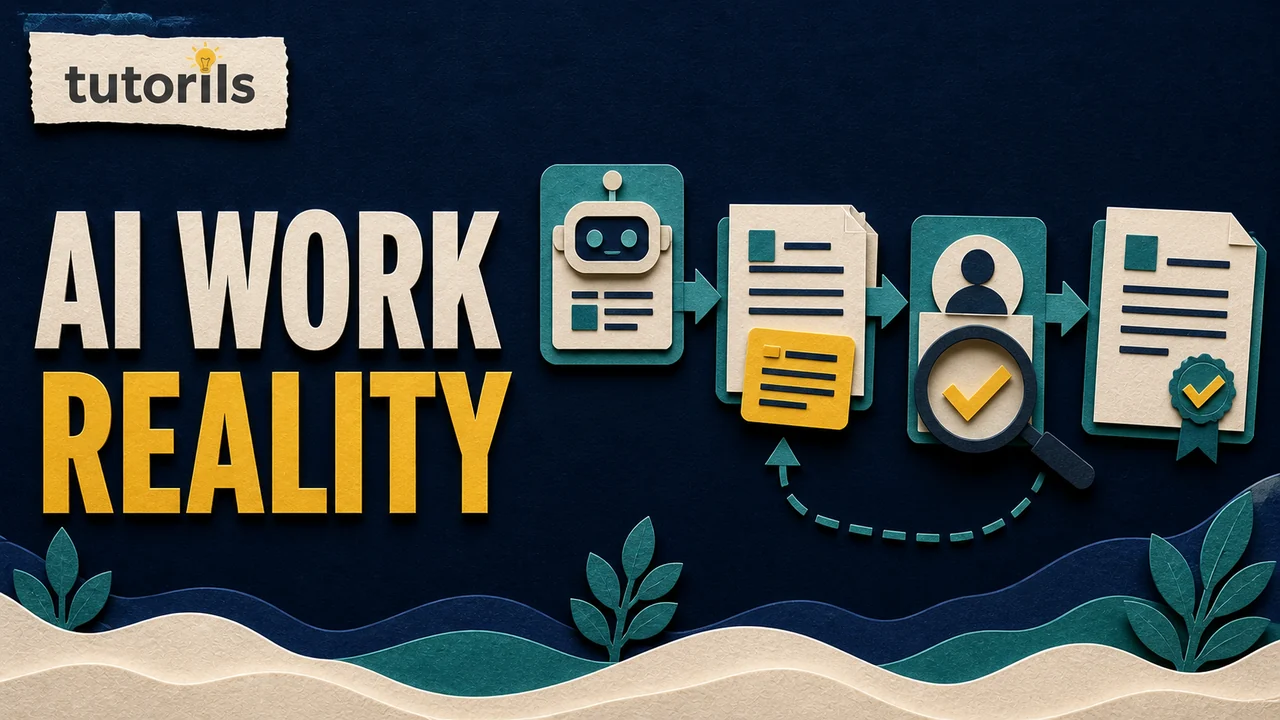
"AI on a green world" can be understood as a practical question: can an artificial intelligence tool help people complete useful environmental or community work without creating more harm than value? The answer depends on the task, the data, the people affected, the tool's resource use, and whether a human verifies the result.
AI on Green World: 5 Ways to Spread Love in 2025
Use AI responsibly to organize environmental observations, reduce measured waste, improve access, coordinate community work, and verify public claims.

AI does not make a project sustainable merely because it produces a green checklist or optimistic image. It can consume energy and water through data-centre infrastructure, reproduce bias, expose personal information, and generate confident errors. It can also help people organize observations, summarize public records, translate instructions, compare options, and detect patterns that would be difficult to review manually.
This guide explains five responsible ways to use AI to support greener and kinder work. "Spread love" here means improving access, cooperation, care, and accountability in a real project. It does not mean replacing community knowledge or making environmental claims that have not been measured.
Begin with a real problem, not an AI feature
Choose a problem that exists without the tool. A community group may need to organize litter observations, a small office may want to understand avoidable printing, a school garden may need clearer volunteer instructions, or a local project may need public information translated into accessible language.
Write the desired outcome in plain terms. "Use AI for sustainability" is not testable. "Reduce the time required to categorize weekly waste observations while a volunteer checks every flagged item" defines the task, the benefit, and the human responsibility.
Ask five questions before selecting a tool:
- Who is affected by the decision?
- What data would be processed?
- What error could cause harm or unfairness?
- How will a person verify the result?
- Is AI necessary, or would a spreadsheet, search, or shared checklist work better?
The last question matters. A simpler method may be faster, cheaper, more private, and easier to maintain. NIST's AI Risk Management Framework is designed to help organizations manage risks across AI design, development, deployment, use, and evaluation. Its approach supports judging a system in context rather than assuming the label "AI" makes it trustworthy.
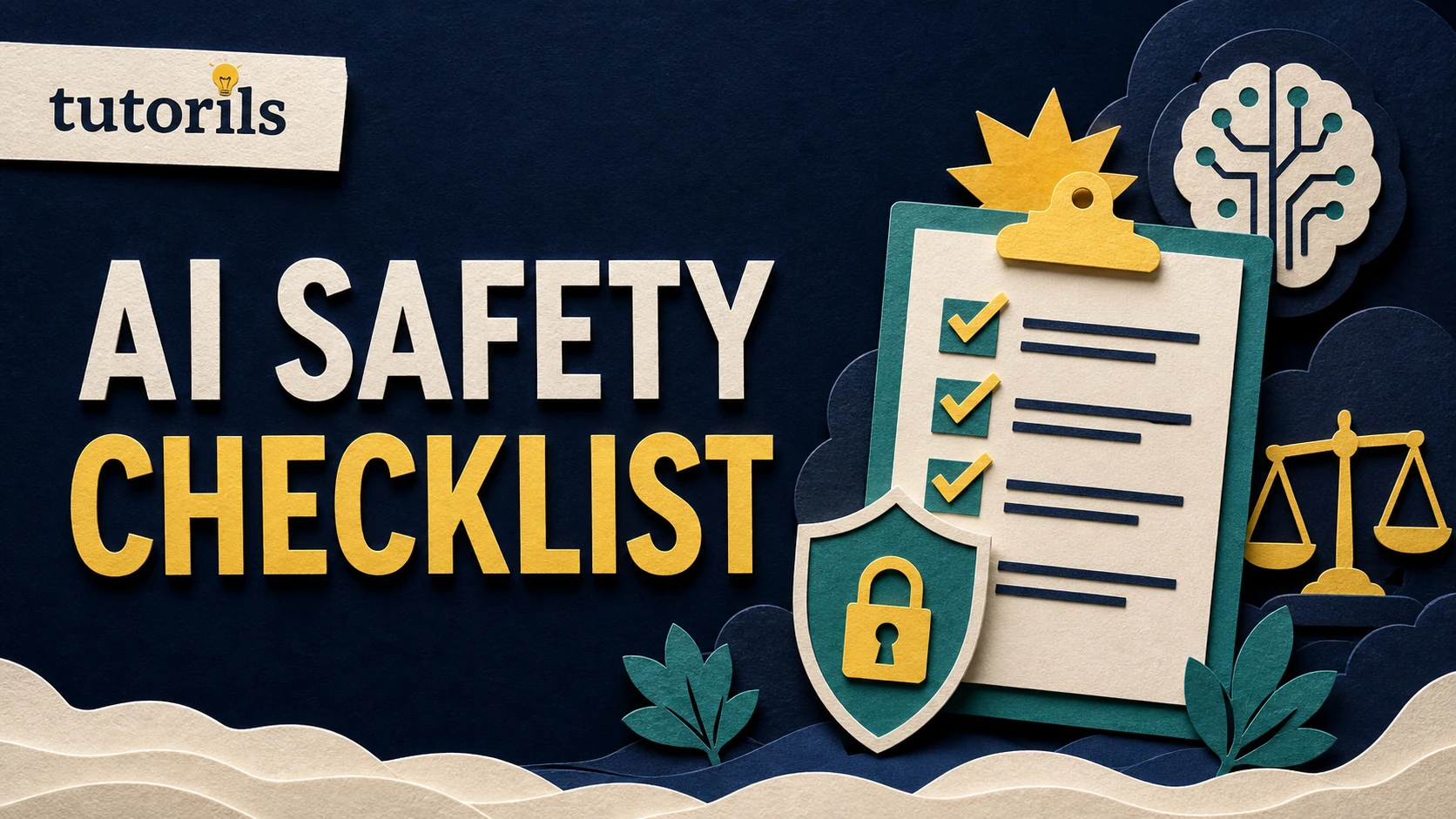
Use the Tutorils AI automation safety checklist to assess access, data sensitivity, failure modes, and review responsibilities before connecting a tool to real records.
Way 1: organize local environmental observations
Community and workplace projects often collect small pieces of information in inconsistent forms. Volunteers may record litter types, plant sightings, leaking taps, room temperatures, damaged recycling labels, or transport barriers in notes and photos. AI can help categorize this material and prepare a review queue.
Begin with a collection standard. Decide what each observation needs, such as date, general location, category, description, source, and review status. Do not collect exact addresses, faces, number plates, health information, or personal contact details unless the project genuinely requires them and has a lawful, secure process.
Use a small non-sensitive sample to test the categories. Ask the tool to suggest labels, then have people familiar with the project correct them. Create an "uncertain" category so the system does not force unclear observations into a confident answer.
The useful output is not a dramatic prediction. It might be a weekly table showing repeated maintenance problems, locations that need a human inspection, or records missing essential context. Keep the original observation alongside the generated category so reviewers can trace the result.
Do not ask a general chatbot to identify a dangerous plant, pollution level, structural fault, or public-health risk from a casual photo and treat the answer as an expert finding. Escalate safety, environmental enforcement, and scientific conclusions to qualified authorities or professionals.
UNESCO's Recommendation on the Ethics of Artificial Intelligence recognizes both potential environmental benefits and harms. It calls for environmental impacts across the AI life cycle to be assessed and for local and Indigenous communities to participate in relevant environmental applications. A local project should preserve that principle by keeping affected people in the design and review process.
Way 2: reduce routine waste in a small workflow
AI can help find repeated waste when the records already exist and the decision remains under human control. Examples include grouping duplicate supply requests, summarizing reasons for returned deliveries, comparing meeting-room usage with bookings, or identifying recurring document reprints caused by the same form error.
Start with a baseline. Measure the current process for a defined period. Record the quantity that matters, such as paper sheets, unnecessary trips, returned items, unused bookings, or staff time. Without a baseline, the project cannot tell whether the new workflow helped.
Remove personal and confidential data before using an external service. Replace names with neutral identifiers and aggregate records where individual detail is unnecessary. Check the tool's retention, training, access, deletion, and export controls. A vague promise that data is secure is not enough for sensitive business or community records.
Ask the tool to group causes or highlight repeated patterns, then inspect the evidence behind each suggestion. The output should lead to a small reversible change. For example, if duplicate supply requests occur because two teams cannot see stock levels, a shared inventory update may solve the problem better than another AI layer.
Run the change for a set period and measure the same baseline quantity again. Record negative effects too. A routing suggestion that reduces distance but causes missed visits, unsafe schedules, or inaccessible service is not a successful green outcome.
The Tutorils guide to using AI for email, research, and reports explains how to keep source material, review, and approval visible in a routine automation. Use the same pattern here: AI prepares a draft or pattern, a person checks it, and the responsible owner makes the decision.
Way 3: make useful information easier to understand
Environmental instructions often fail when they are written for the organization rather than the person completing the task. A recycling guide may use unexplained symbols, a heat-safety plan may be too technical, or volunteer instructions may be available in only one language. AI can prepare a clearer draft, translation, summary, audio script, or question list.
Begin with an authoritative source and record its date. Ask the tool to simplify the wording without changing requirements, numbers, warnings, eligibility, or contact details. Compare every important statement with the source after the rewrite.
For translation, use a fluent human reviewer who understands the subject and local language. Literal translations can change a warning, confuse a category, or use language that the community does not recognize. Keep the original and reviewed translation together so future updates are manageable.
For accessibility, AI can suggest headings, plain-language alternatives, image descriptions, transcript drafts, and reading-order problems. Test the final material with the people who will use it. A generated alt description can still focus on decorative detail and miss the information conveyed by the image.
Do not fabricate quotations, testimonials, or personal stories to make a campaign feel emotional. Real people should control how their experiences, names, and photographs are used. Kind communication is accurate, consent-based, and easy to act on.
Way 4: help a community project plan and coordinate
A small group can use AI to turn approved notes into a practical work plan. The tool might group volunteer availability, draft a checklist, identify missing supplies, produce a meeting summary, or create different versions of instructions for coordinators and participants.
Keep the decision process visible. Start with agreed objectives, constraints, and responsibilities. Tell the tool not to invent resources, permissions, expertise, or commitments. Assign every task to a real owner only after that person agrees.
Use AI to surface questions, not to settle community priorities. It can ask whether the venue is accessible, weather alternatives exist, consent is documented, waste will be removed, or emergency contacts are available. The affected group should decide the answers.
Do not upload a membership list, private messages, children's information, precise locations of vulnerable sites, or other sensitive records without an approved process. Use anonymous availability blocks or local tools when personal data is unnecessary.
An AI assistant and an AI agent carry different levels of operational risk. An assistant may draft a plan that a person reviews. An agent may send messages, change a calendar, or update records. The Tutorils guide to AI agents and AI assistants explains this distinction. For community work, begin with draft-only access and add actions only when permissions, logs, reversibility, and human approval are clear.
Way 5: check claims and report results honestly
Green projects can create misleading claims unintentionally. A tool may convert a small observation into a broad conclusion, cite a source that does not exist, or calculate an environmental saving with assumptions the team never measured.
Use AI to create a claim checklist. For each public statement, record the measurement, period, method, source, uncertainty, and person responsible for approval. Separate a measured result from an estimate and an intention.
For example, "We reduced printed pages by 18 percent during a four-week office trial compared with the previous four weeks" is specific only when the page counts and comparison are real. "Our AI workflow saved the planet" is not meaningful or verifiable.
Ask the tool to challenge the draft report:
- Which claims lack a source?
- Which comparisons use different time periods?
- Which results could have another explanation?
- Which groups experienced a negative effect?
- Which assumptions should be disclosed?
- What information would let another person reproduce the calculation?
Then verify the answers manually. Generated citations should be opened and checked. A linked report must support the sentence, not merely mention the same topic.
Publish corrections when an error is found. Keep a version history for important reports and do not change dates simply to make old work look current. Trust grows when uncertainty, limitations, and revisions are visible.
Account for AI's own environmental cost
AI is not separate from physical infrastructure. Training and operating models uses data centres, networks, electricity, cooling, hardware, and raw materials. The exact impact of one request is difficult to generalize because models, hardware, data centres, energy sources, locations, and measurement methods differ.
The International Energy Agency's Energy and AI report documents growing data-centre electricity demand and emphasizes that local impacts can be more pronounced than the global share suggests. UNESCO's guidance also calls for direct and indirect environmental impact across the AI system life cycle to be assessed.
For a small project, use proportionality:
- Do not run a large model repeatedly when a rule or spreadsheet solves the task.
- Reuse a reviewed prompt and clean input instead of regenerating the same draft many times.
- Process a defined batch rather than sending every minor event to an external model.
- Prefer tools that publish useful information about data handling and environmental practices.
- Keep only outputs and logs that the project genuinely needs.
- Compare the benefit with the added cost, risk, and maintenance.
Do not claim that choosing a particular tool makes the workflow carbon neutral unless an independently supportable method and boundary justify that statement.
Choose a tool using task-level requirements
Create a short requirement sheet before comparing products:
| Requirement | Question |
|---|---|
| Task fit | Can the tool complete this narrow job without broad access? |
| Evidence | Can reviewers inspect sources, inputs, and outputs? |
| Privacy | What is stored, where, for how long, and for what purpose? |
| Access | Can the people involved use it across devices and abilities? |
| Control | Can a person approve, correct, export, and delete the work? |
| Reliability | What happens when the service is wrong or unavailable? |
| Cost | Are money, staff time, energy, and maintenance justified? |
| Exit | Can the project continue if the tool changes or closes? |
Test with non-sensitive sample data. Include easy, ambiguous, and failure cases. Record what the tool gets wrong, not only the impressive output. Do not connect email, drives, calendars, sensors, or payment systems during the first test.
If the tool will influence eligibility, employment, safety, public services, or resource allocation, obtain appropriate legal, ethical, and specialist review. A casual pilot is not enough for a high-impact decision.
Keep people responsible for outcomes
Assign a named owner for the source data, prompt or rules, output review, final decision, and correction path. "The AI decided" is not an accountability process.
People affected by the project need a way to question or correct the result. A volunteer mislabeled as inactive, a neighborhood omitted from a map, or a translation that changes a warning should be repairable without learning how the model works.
Record the limits in the instructions. Tell users what the tool can and cannot do, when a human checks it, and where to report a problem. Keep an alternative manual path for essential work when the service is unavailable.
NIST describes trustworthy AI characteristics that include validity, reliability, safety, security, accountability, transparency, explainability, privacy enhancement, and fairness with harmful bias managed. No single product label proves all of them. They have to be considered throughout the use and review process.
Measure whether the project helped
Choose measures tied to the original outcome. A waste project might track correctly categorized observations, time spent reviewing, repeated issues resolved, and errors introduced. An accessibility project might track completion, comprehension, correction requests, and whether the intended audience can use the final material.
Compare the result with the baseline. Include the time spent cleaning data, correcting output, training volunteers, managing permissions, and fixing failures. A fast draft is not an efficiency gain when review takes longer than the original task.
Ask affected people about burden and usefulness. Did the process make participation easier? Did anyone lose access? Were decisions easier to understand? Did the tool shift unpaid work to the people it claimed to help?
Choose to continue, revise, or stop. A responsible pilot can conclude that AI was unnecessary. That is useful evidence, not a failed innovation.
A simple project workflow
Use this sequence for a low-risk community or small-business experiment:
- Define one environmental or social outcome.
- Identify affected people and invite their input.
- Choose the minimum data and remove unnecessary personal details.
- Record a baseline and current process.
- Test a simple non-AI option first.
- Test AI on a small, non-sensitive sample.
- Document errors, risks, resource use, and review effort.
- Let a named person approve every consequential result.
- Measure the same outcome after the trial.
- Publish limitations and corrections with any claimed benefit.
AI can support a greener and kinder project when it performs a defined role inside a human process. Use it to organize observations, reduce a measured source of waste, improve access to trustworthy information, coordinate agreed work, and test public claims. Keep affected people involved, protect their data, account for the technology's own footprint, and make every important decision reviewable. The goal is not to make AI look caring. It is to help people deliver a result that can be checked and genuinely helps.
Reader answers
Frequently asked questions
Open a question to read the answer. Opening another answer closes the previous one.
What does green AI mean in this guide?
It means using AI proportionately for a defined environmental or community outcome while also considering the technology's energy, infrastructure, data, fairness, and maintenance costs.
Can AI automatically make a project sustainable?
No. A project needs a baseline, measurable outcome, verified evidence, human responsibility, and an assessment of negative effects. Generating a green plan or image does not prove environmental benefit.
How can AI help a local environmental group?
It can categorize non-sensitive observations, prepare review queues, simplify approved information, draft checklists, or identify missing records. Local knowledge and qualified review must control consequential decisions.
Should community projects upload member data to AI tools?
Not by default. Collect the minimum information, remove unnecessary identifiers, review retention and access terms, and use anonymous or local alternatives when personal data is not needed.
How can AI reduce waste in a small business?
Start with measured records, use AI to group repeated causes, inspect every suggestion, make one reversible process change, and compare the same measure after the trial.
Can AI translate environmental instructions safely?
It can draft a translation, but a fluent human who understands the subject should verify warnings, numbers, requirements, local language, and cultural context before publication.
Does every AI request have an environmental impact?
AI operates through physical data-centre and network infrastructure. The exact impact varies by model, hardware, location, energy source, and measurement method, so avoid universal per-request claims.
How do I choose an AI tool for a green project?
Define the task, evidence, privacy, access, human control, reliability, cost, and exit requirements. Test a non-sensitive sample and compare the tool with a simpler non-AI method.
Who is responsible when an AI-supported project is wrong?
The organization and named people using the tool remain responsible for sources, review, decisions, correction, and affected-user support. Saying the AI decided is not an accountability process.
How should a green AI project report results?
State the baseline, measure, time period, method, source, uncertainty, review owner, and limitations. Separate measured results from estimates and intentions, and publish corrections when evidence changes.