The SSC CGL 2025 answer key is now a historical exam record, not an open objection opportunity. The Staff Selection Commission declared the Tier-II final result on 14 May 2026 and made the final answer keys, response sheets, and marks available for a limited period from 17 June to 16 July 2026. That access window has closed.
SSC CGL 2025 Answer Key: Insights & Tutorials
A source-checked guide to the SSC CGL 2025 tentative and final answer-key process, response-sheet review, score estimates, objections, and result checks.
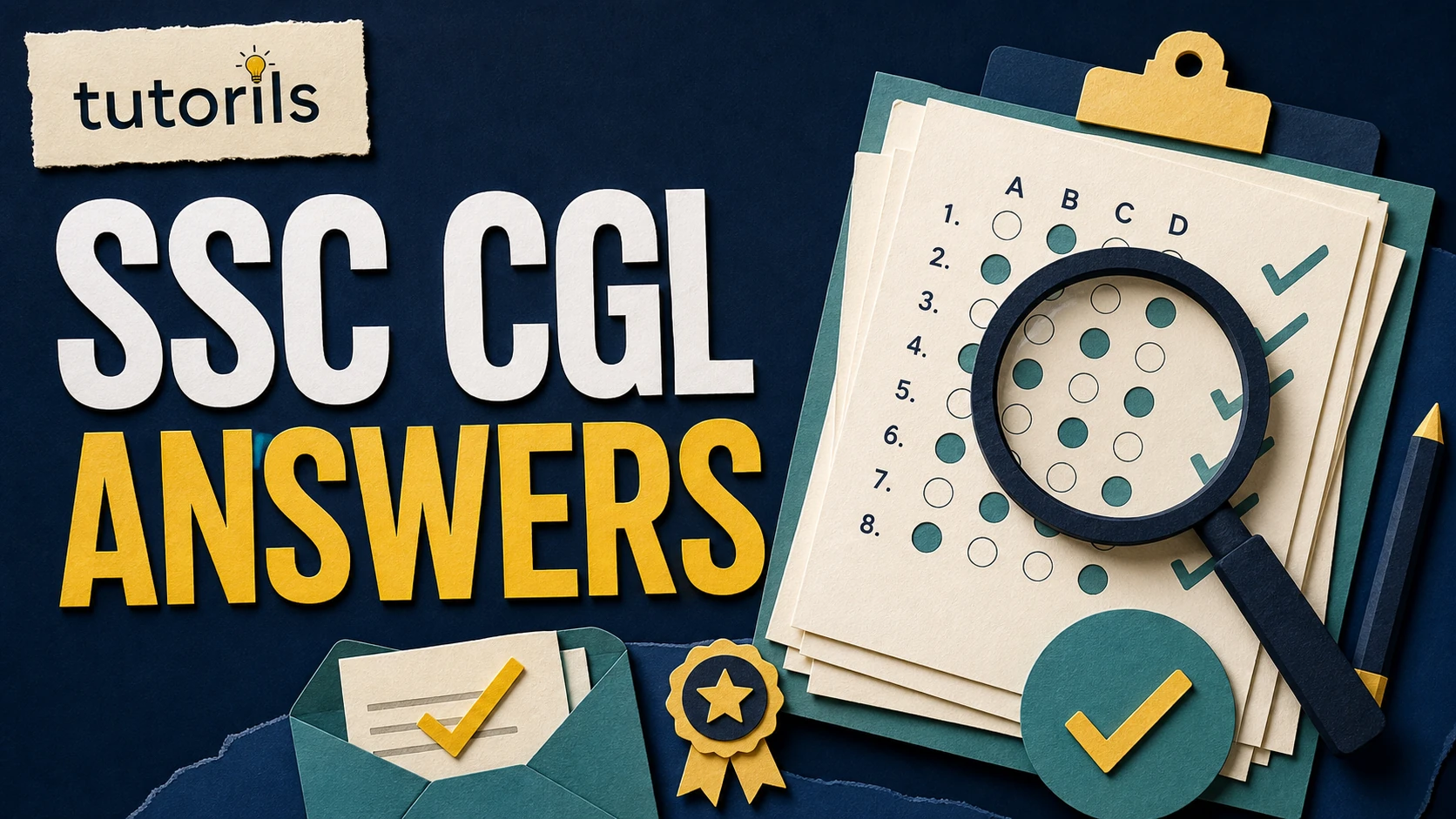
This distinction matters. A tentative answer key helps candidates check recorded responses and submit a supported challenge during the stated window. A final answer key reflects the Commission's post-review position and is used for evaluation. Neither should be confused with a prediction from a coaching channel or an unofficial answer-key PDF.
This guide explains how the SSC CGL 2025 answer-key process worked, what a saved response sheet can still tell you, and how to handle future SSC answer keys safely. Always read the notice for the exact examination and tier because login dates, challenge instructions, permitted languages, and fees can change.
The current status of the SSC CGL 2025 answer key
SSC's official Tier-II final answer key notice states that the Combined Graduate Level Examination, 2025 final result was declared on 14 May 2026. It then provided individual final answer keys, response sheets, and marks through candidate login for a fixed June to July 2026 window.
If you did not download those records before the deadline, do not pay a third party that promises to reopen the official link. Check the SSC website and your candidate login for any later official notice. A search-result snippet, old direct login page, or shared file is not a substitute for a current SSC announcement.
SSC's Tier-I result write-up also confirms that representations against the tentative answer keys were examined and that keys were modified where necessary before the final keys were used for evaluation. That is why a score calculated from the tentative key can differ from the later official outcome.
Tentative answer key versus final answer key
A tentative key is the Commission's initial published answer position. During the notice's challenge window, a candidate may compare it with the question paper and recorded response, then use the official challenge module if there is a defensible issue.
A final key comes after SSC considers timely representations. It is the version used for evaluation. Once the final result and final key process is complete, the earlier tentative key should not be treated as the controlling answer.
| Record | Main purpose | Candidate action |
|---|---|---|
| Tentative answer key | Initial official answers | Review and challenge within the notice window |
| Candidate response sheet | Shows recorded responses | Confirm that the system captured your selections |
| Final answer key | Post-review answers used for evaluation | Use for final self-analysis when available |
| Marks or scorecard | Official marks record | Compare with the result and retain a copy |
| Result write-up | Official qualification and cut-off information | Read the correct list and category notes |
Do not mix records from different tiers. CGL Tier-I and Tier-II have different papers, schedules, evaluation roles, and notices. The filename alone may not make the tier obvious, so check the subject line inside the SSC PDF.
How to find an SSC answer-key notice safely
Begin at ssc.gov.in, not at a shortened link received in a group. Open the Notice Board or Answer Key area and locate the notice that names the exact examination, year, and tier. Read the entire PDF before opening any candidate link.
Check these details:
- examination name and year
- Tier-I or Tier-II
- date of the notice
- candidate login period
- challenge opening and closing time
- permitted challenge method
- fee stated in that specific notice
- instruction to save or print the response sheet
- restrictions on personal use of the downloaded question paper
SSC often provides access for a limited period. Download the notice and personal records while the window is active. Save them with clear filenames such as CGL-2025-Tier1-response-sheet.pdf. Avoid filenames that expose a registration number if the file will be synced or shared.
Tutorils' guide to downloading and sharing government documents safely covers practical steps for protecting candidate records.
How to review a response sheet accurately
A response sheet should be read question by question. It normally shows the question, options, recorded response, and the answer indicated by the key. The exact layout can change.
Create a simple review table with these columns:
- question identifier
- your recorded option
- tentative or final key option
- correct, incorrect, or not attempted
- marks under the applicable scheme
- challenge considered
- supporting official source
First confirm that the recorded response is what you selected. A surprising answer could be a memory error, a sequence difference, or a genuine record issue. Current SSC challenge modules may present questions and options in a standard sequence that differs from the sequence seen during the examination. Follow the explanation in the current notice rather than comparing screen position alone.
Review one paper or section at a time. Keep a subtotal, then recheck questions affected by a challenge or special instruction. This is slower than using an unknown score calculator, but it produces a traceable result.
How to estimate a raw score without misleading yourself
Use only the marking scheme in the official examination notice for that tier and paper. Do not assume every SSC paper awards and deducts the same marks. Write the formula before calculating:
Estimated raw score = marks for correct responses minus penalties for incorrect responses
Unattempted questions generally contribute according to the applicable notice, but you should confirm the exact rule. Also check whether a section has a special qualifying requirement or different marking pattern.
A raw estimate is not necessarily the score used to shortlist a candidate. SSC's Tier-I result write-up states that the 2025 Tier-I examination ran in multiple shifts and that normalized marks were used for qualification. It also published separate lists and cut-offs for different post groups.
Therefore:
- do not compare a raw estimate directly with a normalized cut-off
- do not assume one post-group cut-off applies to every candidate
- do not treat an unofficial predicted cut-off as a result
- do not ignore category, post, paper, and eligibility notes
- do not round figures until the end of your private calculation
The most useful estimate is a range with a note about uncertainty. It can help with study planning, but it should not trigger a financial or career decision before the official result.
How to decide whether a tentative answer deserves a challenge
A challenge should be evidence-led. Disagreement is not enough. Look for a clear conflict between the tentative key and an authoritative source, an ambiguity in the wording, more than one defensible option, or a technical issue that the official module permits you to raise.
Good supporting material may include:
- a statute, rule, or government publication
- an official textbook or recognised academic reference
- a precise page and edition citation
- a calculation that shows each step
- a clear explanation connecting the source to the question
A blog, coaching video, social post, or AI answer can help you identify a possible issue, but it is weak evidence by itself. If you use AI to think through a question, apply the checks in Tutorils' guide on how to verify AI answers before using them.
Write the challenge in plain language. Identify the question, state the tentative answer, state the answer you believe is correct, cite the source, and explain the connection. Avoid emotional claims or copied group messages.
Submitting an objection during an active window
For a future SSC answer key, use only the challenge module linked from the official notice. Sign in with the requested candidate credentials. Select the question, review the displayed sequence carefully, enter or upload the permitted evidence, and pay only the fee stated in that notice.
Complete the process before the exact closing time. A draft, bank debit, or screenshot is not automatically proof that the representation was submitted. Save the acknowledgement or transaction evidence shown by the system.
Fees and procedures can change. For example, an older SSC CGL notice may show a different fee from a later SSC examination notice. Never carry a remembered amount into a new challenge. The current PDF controls.
Do not submit the same objection repeatedly. Keep one evidence folder containing the notice, response sheet, supporting source, payment record, and acknowledgement.
What SSC does after tentative-key challenges
SSC reviews representations received through the prescribed process and may modify the key where necessary. The 2025 Tier-I result write-up expressly says representations were examined, keys were modified where required, and final keys were used for evaluation.
This does not mean every challenge receives a personal explanation. The operational outcome may appear through a revised or final key and the marks or result.
Once a final key is available, use it for self-analysis rather than continuing to circulate the tentative key. If an official notice announces a limited download window, save the records immediately. SSC's Tier-II notice warned candidates that access would end after the specified period.
Reading the result alongside the answer key
An answer key explains how responses were evaluated. A result write-up explains who qualified, which cut-offs applied, and any important list-specific notes. Read them together.
For CGL 2025 Tier-I, SSC published separate shortlisting information for Junior Statistical Officer, Statistical Investigator Grade-II, and other posts. The result also described normalized marks. A candidate can therefore calculate a plausible raw total correctly and still misunderstand qualification by using the wrong list or an unofficial cut-off.
Check:
- roll number in the correct official list
- category and post group
- normalized marks where applicable
- minimum qualifying criteria
- withheld or unprocessed-result notes if relevant
- next-stage instructions
- deadlines for any preference or document step
Organise the downloaded records so they remain usable later. The Tutorils guide on organising notes without building a second job offers a simple folder and review approach.
Common answer-key mistakes
Following an old direct login link
Candidate portals can expire. Start with the current SSC notice and do not assume an old vendor URL is active or safe.
Confusing tentative and final answers
A tentative answer can change after representations. Label every saved file with the stage and date.
Mixing Tier-I and Tier-II
The papers and purposes differ. Verify the tier inside the notice and response sheet.
Using the wrong marking scheme
Negative marking and paper structure must come from the applicable examination notice. A generic calculator can silently apply the wrong formula.
Treating a raw score as a normalized score
For a multi-shift examination, SSC may use its published normalization method. A private raw estimate cannot reproduce an official normalized result without the required data and method.
Missing the download deadline
SSC can remove individual response sheets and keys after the stated window. Save a PDF and a local backup while access is open.
Posting personal records publicly
Response sheets may reveal registration details and other personal information. Redact them before asking for help.
Challenging without primary evidence
A popular answer is not necessarily the official answer. Use authoritative material and a precise explanation.
A reusable checklist for future SSC answer keys
- Open ssc.gov.in directly.
- Find the exact examination, year, and tier notice.
- Confirm the login and challenge window.
- Download the official notice.
- Sign in through the link provided by SSC.
- Save the response sheet and question paper for personal use.
- Check that recorded responses match your selections.
- Apply the marking scheme from the examination notice.
- Separate raw estimates from normalization and cut-off assumptions.
- Research only genuinely questionable answers.
- Submit a concise, sourced challenge through the official module.
- Save the acknowledgement and payment evidence.
- Revisit SSC for the result, marks, and final key notices.
- Protect personal candidate information.
Add the key dates to a calendar with reminders before the closing hour. Tutorils' guide on calendar blocking without overscheduling can help you reserve a focused review session rather than attempting the whole response sheet at the deadline.
What CGL 2025 candidates can do now
As of this review, the published Tier-II final-key access period has ended. Candidates who saved their response sheet, key, and marks can retain them for personal analysis and future preparation. Those who did not should rely on official results and any records still available in candidate login, not unofficial recovery offers.
For future cycles, the durable habit is straightforward: read the official notice, download personal records during the active window, calculate only with the correct marking scheme, challenge only with strong evidence, and separate an estimate from an official result.
Reader answers
Frequently asked questions
Open a question to read the answer. Opening another answer closes the previous one.
Is the SSC CGL 2025 answer key still available?
The official Tier-II final-key notice provided access only until 16 July 2026. Check ssc.gov.in and candidate login for any later official update, but do not trust third-party reopening claims.
What is the difference between a tentative and final SSC answer key?
The tentative key is open to challenges during a stated window. SSC considers valid representations and uses the resulting final key for evaluation.
Can I challenge the SSC CGL 2025 final answer key?
Use only the remedy stated in an official SSC notice. The ordinary challenge stage applies to the tentative key within its deadline, not to an expired unofficial copy.
How do I calculate my SSC CGL raw score?
Count correct and incorrect responses, then apply the exact marks and penalty in the official notice for that tier and paper. Keep the result separate from normalization.
Why can my estimated score differ from SSC marks?
Possible reasons include a changed final key, wrong marking scheme, response-reading error, or normalization. SSC stated that normalized marks were used for 2025 Tier-I shortlisting.
Where should I download an SSC response sheet?
Use the candidate link provided in the relevant notice on ssc.gov.in. Avoid search advertisements, shortened links, and shared login pages.
What evidence is suitable for an SSC answer-key objection?
Use an authoritative source such as a law, government publication, official textbook, recognised reference, or a transparent calculation directly supporting the disputed answer.
Does SSC refund an answer-key challenge fee?
Do not assume a refund. Read the current examination's challenge notice for the fee, payment terms, and any refund rule before submitting.
Can I share my SSC response sheet online?
It is safer not to. If you need help, redact registration details, roll number, date of birth, contact information, QR codes, and other identifiers.
Is an unofficial SSC CGL cut-off prediction reliable?
It is only an estimate. Qualification depends on the official result, applicable list, category, post group, normalization, and eligibility notes published by SSC.