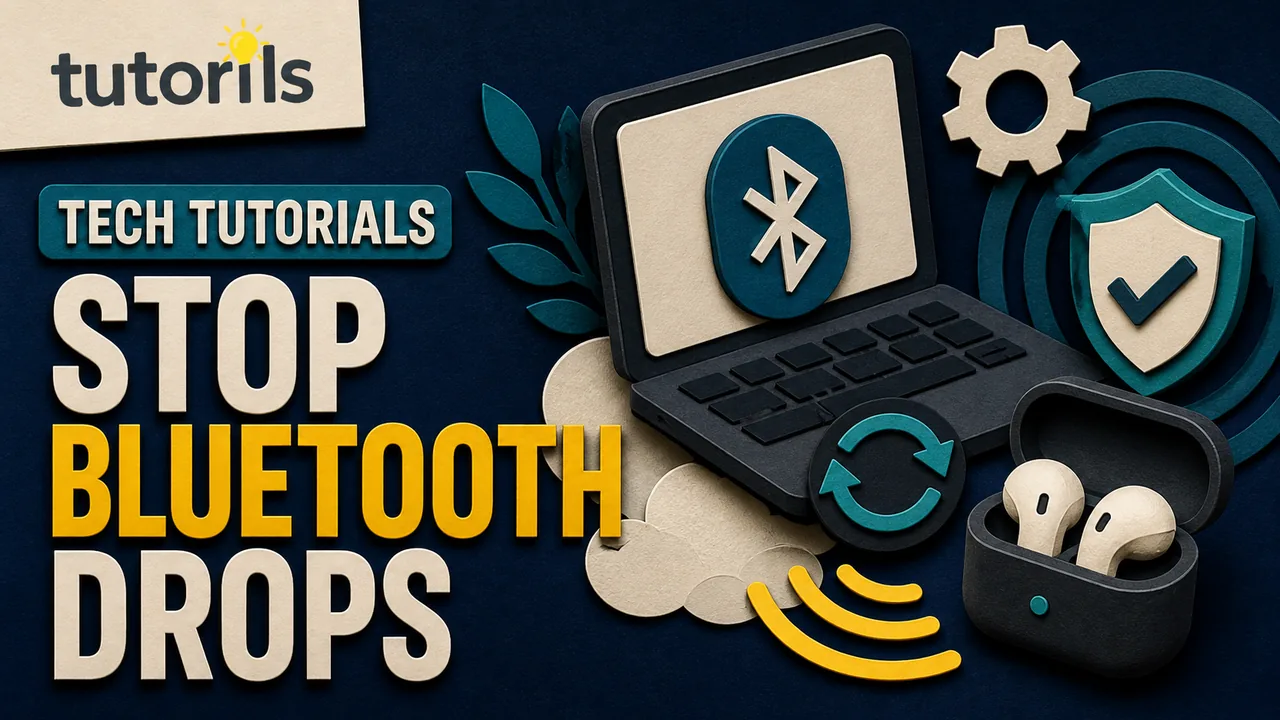
A Bluetooth device that drops every few minutes can make a simple call, song, or typing session unexpectedly frustrating. The cause is not always the accessory. A low battery, another paired phone, radio interference, an operating system update, or a damaged adapter can produce almost the same symptom.
How to Fix Bluetooth Devices That Keep Disconnecting
Find why Bluetooth headphones, speakers, keyboards, or other accessories keep dropping, then fix power, pairing, interference, software, or hardware issues safely.
The most reliable way to fix repeated Bluetooth disconnects is to isolate the problem before changing settings. Start with safe checks that do not erase anything. Move to re-pairing, updates, and driver work only when the earlier result points in that direction. Menu names vary by device, operating system version, and manufacturer, so use the closest matching option and consult the device maker when a control is different.
First identify what is actually disconnecting
Write down the symptom before troubleshooting. Does the device vanish from the Bluetooth list, remain connected but stop producing sound, or reconnect by itself? Does the problem appear after sleep, during a call, when the battery is low, or only in one room?
Then run two comparison tests:
- Connect the same accessory to another compatible phone, tablet, or computer.
- Connect a different Bluetooth accessory to the original phone or computer.
If one accessory disconnects from every host, focus on that accessory, its battery, firmware, and hardware. If several accessories fail only on one laptop or phone, focus on that host's settings, software, and Bluetooth radio. If the issue occurs only with one particular pairing, rebuild that pairing after the basic checks.
This same isolation habit is useful for other wireless faults. The Tutorils guide to fixing no-signal problems shows why separating a device issue from a network issue saves time.
Charge both devices and check power behavior
Charge the accessory and the phone or computer. Replace removable batteries if they are old or uncertain. Some headsets reduce radio activity or shut down at a low charge, while a laptop in an aggressive battery-saving mode may limit background device activity.
Watch the accessory's indicator or companion app, if the manufacturer provides one. Do not install an unofficial battery or “Bluetooth booster” app. It cannot repair a failing radio and may request permissions unrelated to the problem.
If disconnects happen only when a laptop sleeps, closes its lid, or switches to battery power, test while it is plugged in and awake. That comparison is more useful than immediately changing every power option. A work-managed computer may enforce sleep or radio policies that only an administrator can change.
Confirm range and reduce interference
Move the devices close together with a clear path between them. Keep them away from dense metal objects, crowded USB hubs, and unshielded USB 3 devices while testing. Microsoft's official Bluetooth troubleshooting guidance specifically notes that an unshielded USB device connected to a USB 3.0 port can interfere with Bluetooth.
Bluetooth shares busy radio space with Wi-Fi and other equipment. A crowded desk with a router, dock, external drive, wireless receivers, and multiple active accessories can behave differently from a quiet room. Test in another location and disconnect unnecessary wireless accessories for a few minutes. If stability returns, reconnect devices one at a time to identify the combination that causes trouble.
Do not assume a advertised maximum range will apply through walls, people, furniture, and competing radio signals. The useful range depends on both devices and the environment.
Stop another device from taking the connection
Many earbuds, speakers, keyboards, and car systems remember several hosts. Some support multipoint connections, while others simply connect to the most recent available device. An accessory can appear to “drop” from your laptop because it quietly moved to a nearby phone.
Temporarily turn off Bluetooth on other previously paired hosts, or remove the accessory from those hosts if you no longer use the pairing. Then reconnect it to the intended device. If the accessory has a companion app, review its multipoint or connection-priority settings. Use only the manufacturer's official app.
For a shared speaker or car system, ask whether someone else is connecting automatically. This is especially important when the problem occurs at a particular time or place rather than everywhere.
Restart cleanly before erasing the pairing
Turn the accessory off, wait briefly, and turn it on again. Toggle Bluetooth off and on through the operating system's settings. Save open work and restart the phone or computer if the connection remains unstable.
These steps clear temporary radio and service states without deleting saved pairings. Test after each change. If you make five changes at once, you will not know what helped, and a later recurrence will be harder to diagnose.
On Windows 11, Microsoft recommends its Bluetooth troubleshooter in the Get Help app. On Android, start from the system Bluetooth page and the device manufacturer's support guidance. On an iPhone or iPad, Apple recommends checking that the accessory is nearby, charged, turned on, and in discovery mode before unpairing. Apple's current Bluetooth accessory guidance also advises disconnecting the accessory from other devices when it pairs elsewhere but not with the intended iPhone or iPad.
Remove and pair the device again
Re-pair only after power, range, interference, and competing hosts have been checked. Removing a device deletes the local pairing relationship, so note any custom buttons, accessibility settings, or app configuration first.
Use the host's Bluetooth settings to forget or remove the accessory. Turn the accessory off. Follow its manual to enter discovery or pairing mode, since holding the wrong button can trigger a reset instead. Add it again from the system Bluetooth screen and confirm any displayed code.
If the accessory refuses to enter pairing mode, consult the manufacturer's instructions for clearing its saved host list. A full accessory reset may erase all pairings and custom settings, so treat it as a later step rather than a default action.
On Android, Google's official pairing guidance notes that some instructions apply only to certain Android versions or supporting hardware. On Windows, use Microsoft's pairing instructions. This avoids misleading guides that assume every device exposes the same controls.
Separate an audio problem from a Bluetooth drop
Headphones may remain paired while sound moves to the laptop speakers, a call changes the audio profile, or one app uses the wrong output. Before rebuilding the pairing again, check the active audio output and microphone in the operating system and in the calling or meeting app.
Close the affected app and test with a second trusted app. If music works but calls fail, inspect microphone permission, call-device selection, and the accessory's supported call profile. If all audio stops while the Bluetooth screen still says connected, the issue may be the sound route rather than the radio link.
For earbuds, test each side according to the maker's instructions. Charging contacts can prevent one bud from charging or joining its pair. Clean only as the manufacturer recommends and avoid liquid or sharp tools.
Install current operating system and accessory updates
Check for system updates through the phone or computer's official settings. Check accessory firmware through the manufacturer's official support page or companion app. Keep the accessory charged and do not interrupt a firmware update.
Read release notes when available. An update may address Bluetooth stability, but an update can also introduce a new issue. Record the version and the date the disconnects began. That information is useful if support needs to investigate.
Avoid third-party driver websites and generic driver updater utilities. A wrong driver can make Bluetooth disappear entirely or create security and stability problems. The Tutorils Windows laptop performance guide follows the same safe rule: use Windows Update or the computer manufacturer's support channel for hardware software.
Repair Bluetooth drivers on Windows carefully
If several accessories disconnect only on one Windows laptop, open Windows Update and install applicable updates. In Device Manager, identify the Bluetooth adapter and check for an updated driver. Microsoft says Windows may search automatically, and the PC manufacturer's support site may provide a newer compatible driver. Its Bluetooth driver guide also describes rolling back a driver when the problem began after a driver update and that option is available.
Before uninstalling an adapter, download the correct driver for the exact PC model or make sure another connection method is available. Removing the adapter can temporarily remove Bluetooth. After a restart, Windows often reinstalls the device, but manufacturer-specific hardware may still need its approved package.
Do not change registry settings copied from a forum or disable security services to fix a consumer connection. If the Bluetooth adapter is missing from Device Manager, shows an error, or repeatedly disappears after a clean driver install, contact the computer manufacturer.
Check permissions and managed-device limits
Some accessories depend on a companion app for setup, location-based discovery, notifications, or calls. Check that the official app has only the permissions needed for its documented features. On iPhone and iPad, Apple points users to Privacy & Security, then Bluetooth, when an accessory's app needs Bluetooth access. Android labels can differ by version and brand.
A school or work administrator may restrict Bluetooth, device discovery, driver installation, or certain accessory types. Do not try to bypass those controls. Report the accessory model, host model, operating system version, time of failure, and steps already tested to the support team.
If you are concerned that an unfamiliar app or device is interfering with your phone, use the evidence-based checks in the Tutorils phone security guide. A disconnect by itself is not proof that a phone has been hacked.
Use resets only after documenting settings
A network settings reset can remove saved Wi-Fi networks, Bluetooth pairings, VPN settings, or other connections, depending on the platform. It should not be the first response to one unstable accessory.
Before using a reset:
- record Wi-Fi names and make sure you know the passwords
- save VPN or work-network details
- note accessibility and accessory settings
- confirm that account recovery methods work
- check the manufacturer's current instructions for what the reset removes
Reset the accessory only if its official manual recommends it for this symptom. Reset the host's network settings only after several Bluetooth devices fail and less disruptive steps have not helped. Reconnect one item and test before restoring everything.
Recognize a likely hardware problem
Hardware becomes more likely when an accessory disconnects from several known-good hosts, cannot hold a charge, has been exposed to water or impact, becomes unusually hot, or fails immediately after a damaged port or cable is moved. A host-side radio problem is more likely when every Bluetooth device fails, the adapter repeatedly disappears, or the same accessories work reliably elsewhere.
Stop using a swollen, leaking, excessively hot, or physically damaged battery-powered accessory. Follow the manufacturer's safety and recycling guidance. Do not open a sealed lithium battery device unless the maker provides a safe user-service procedure.
When contacting support, provide a short evidence list: models, software versions, when the issue began, distance and environment, results with another host and accessory, and the exact point of disconnection. That is more useful than saying Bluetooth is broken.
Keep the connection stable after the fix
Once the problem stops, reverse temporary test changes one at a time. Reconnect other hosts, return to the normal desk, and test sleep or battery use. If one change brings the disconnect back, you have a much stronger clue.
Keep the accessory charged, install updates through official channels, and remove pairings you no longer use. Store recovery notes with your other device records. The Tutorils photo transfer guide can help you preserve important files before deeper phone or laptop troubleshooting.
Bluetooth disconnects do not have one universal fix. A calm sequence of comparison tests, basic radio checks, careful re-pairing, and official updates usually identifies whether the problem belongs to the accessory, the host, or the environment. Stop after the first verified fix rather than continuing to change a working setup.
Reader answers
Frequently asked questions
Open a question to read the answer. Opening another answer closes the previous one.
Why does my Bluetooth device keep disconnecting?
Common causes include low power, distance, interference, another paired host taking the connection, damaged pairing data, outdated software, or failing hardware. Comparison tests help identify which one applies.
Can low battery cause Bluetooth disconnects?
Yes. Some accessories reduce radio activity or shut down when power is low. Fully charge both devices or replace removable batteries before changing software settings.
Should I forget and re-pair the device first?
Not first. Check power, range, interference, and other connected hosts. If those do not help, remove the pairing and add the accessory again using its official instructions.
Why do my earbuds connect to another phone?
The earbuds may remember several hosts or support multipoint. Temporarily disable Bluetooth on other paired devices and review connection-priority settings in the maker's official app.
Can USB devices interfere with Bluetooth?
Yes. Microsoft notes that some unshielded USB devices connected to USB 3 ports can interfere. Test with unnecessary hubs, drives, or receivers disconnected.
Why is Bluetooth connected but there is no sound?
The audio may be routed to another output, or a call app may use a different device. Check the system and app output before rebuilding the Bluetooth pairing.
Where should I download a Bluetooth driver?
Use Windows Update or the exact PC manufacturer's support website. Avoid generic driver sites and automated driver utilities, which may install an incompatible or unsafe package.
Will a network reset fix Bluetooth disconnects?
It may help some host-side configuration faults, but it can remove saved Wi-Fi, Bluetooth, VPN, or other settings. Use it only after safer checks and a settings backup.
How do I know if the Bluetooth accessory is faulty?
Hardware is more likely if it disconnects from several known-good hosts, cannot hold a charge, overheats, has physical damage, or fails immediately after impact or liquid exposure.
Is Bluetooth disconnecting proof my phone is hacked?
No. A disconnect alone is not evidence of compromise. Check power, pairing, software, and hardware first, then investigate security only when there are additional credible signs.